
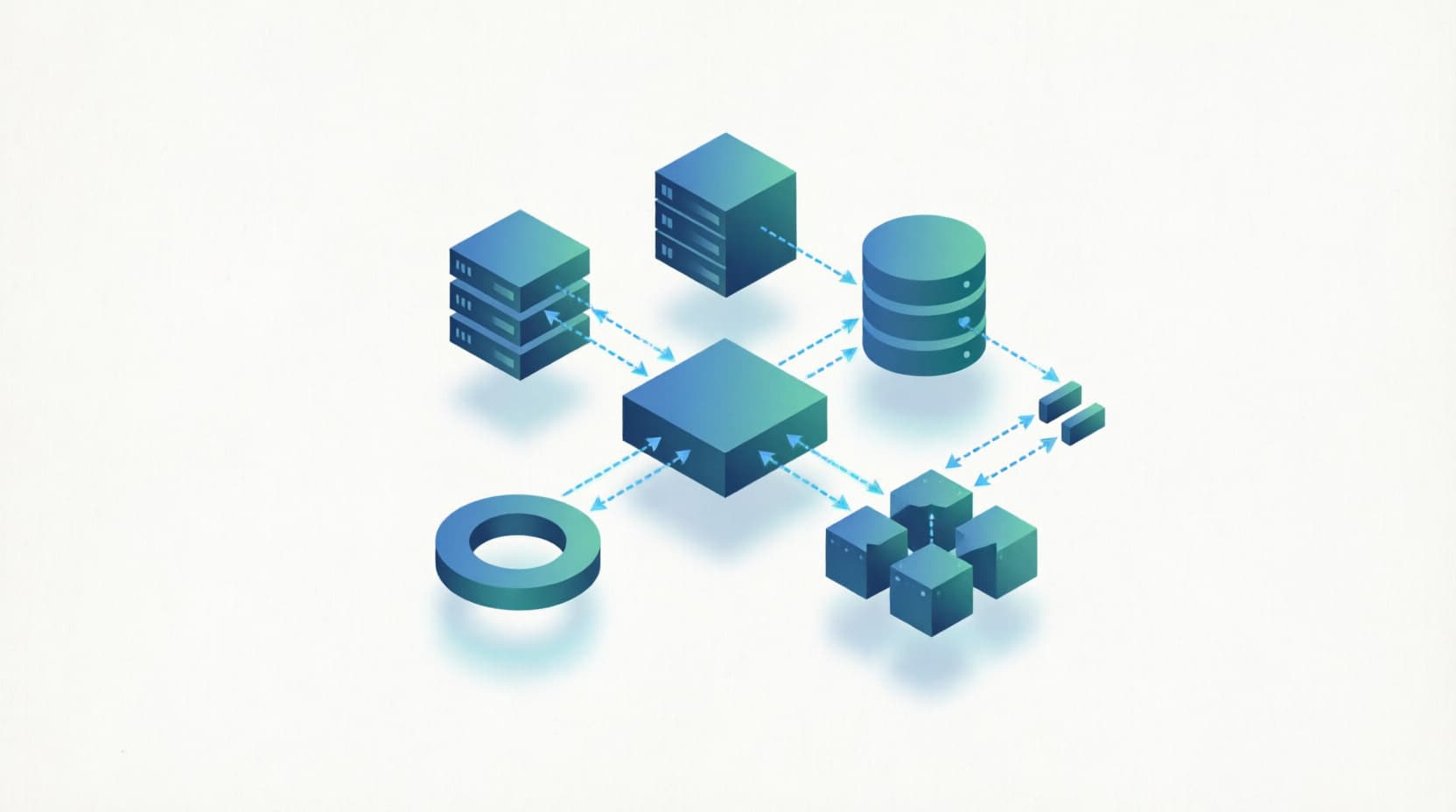

Building Scalable Web Applications Without Over-Engineering
Most applications fail from over-engineering before they ever face a real scaling challenge. Here is how to build for scale without building a distributed system before you need one.
Every engineering team has seen it: a startup with five users running a Kubernetes cluster, or a team spending six months building microservices for an application that could run on a single server for years. Over-engineering is the silent killer of product velocity.
The Real Scaling Problem
Most applications never reach the scale that justifies distributed architecture. According to a 2024 study by Platformatic, 90 percent of SaaS applications serve fewer than 10,000 daily active users. A well-optimized monolithic application running on a single server can handle that load without breaking a sweat.
The problem is not architecture. It is premature optimization.
What Actually Matters For Scale
Database Design
The most common bottleneck is the database. Poor indexing, N+1 queries, and missing connection pooling bring applications down at 500 concurrent users. Before adding caching layers or read replicas, fix the queries.
Put compound indexes on your most common query patterns. Use pagination from day one. Set connection pool limits. Monitor slow queries in production. These steps alone eliminate 80 percent of scalability issues.
Caching Strategy
Cache at the right layer. Application-level caching with Redis or Memcached handles most read-heavy workloads. Do not add a CDN until you have static assets. Do not add Varnish until you have traffic patterns that justify it.
Apply cache invalidation rules early. A cache that serves stale data is worse than no cache at all. Use the cache-aside pattern for read-heavy workloads and write-through for data that needs immediate consistency.
Stateless Design
Build stateless application servers from the start. Store session data in Redis or a database, not in memory. This lets you horizontally scale by adding server instances behind a load balancer without modifying code.
Asynchronous Processing
Any operation that does not need an immediate response belongs in a queue. Email delivery, report generation, PDF creation, and notification dispatch should never block the HTTP request cycle.
Use a simple job queue like Bull, Celery, or Sidekiq. Process jobs in the background. Return a 202 Accepted with a job ID. The frontend can poll for completion or receive a webhook.
The Architecture Decision Framework
| Traffic Level | Recommended Architecture |
|---|---|
| < 1,000 DAU | Monolithic with single database |
| 1,000 - 10,000 DAU | Monolithic with read replicas and caching |
| 10,000 - 100,000 DAU | Modular monolith with background workers |
| > 100,000 DAU | Domain-based service decomposition |
When To Split Services
Only decompose when you have evidence of a problem. Measurable signals include:
- Team coordination overhead: multiple teams stepping on each other's code
- Resource contention: one feature consuming disproportionate CPU or memory
- Deployment coupling: a change in one area requires coordinated releases across the stack
- Data isolation requirements: compliance mandates separate storage for specific data
Each service split should solve a specific, measured problem. Do not split because it feels cleaner. Split because you have data that proves the cost of the monolith exceeds the cost of distribution.
The Pragmatic Stack
A surprisingly scalable stack requires no distributed magic:
- Application: Node.js or Go with stateless HTTP handlers
- Database: PostgreSQL or MongoDB with proper indexing
- Cache: Redis with well-defined TTL policies
- Queue: Bull or RabbitMQ for background processing
- Frontend: React or Vue with server-side rendering
- Deployment: Single server or two-server setup with failover
This stack handles millions of monthly requests. When it stops handling them, you will know exactly why, and you will have the data to make an informed architectural decision instead of a guess.
The most expensive architecture decision is the one you make before you have data to justify it.
- 90% of SaaS apps serve fewer than 10,000 daily users
- Database optimization solves 80% of scaling problems
- Cache at the right layer with proper invalidation
- Build stateless servers from day one
- Use async queues for non-blocking operations
- Split services only when you have measured evidence


Leave a comment